For Adult Writers & Artists
I lead an online sessions called “Meditative Art & Writing Workouts”. Please find out more and/or register your interest here.
I teach and offer writing retreats–both online and, when possible, live. I offer manuscript consultation and serve as a private writing coach for a reasonable fee. I also offer workshops, classes, retreats from time to time. Please make sure to sign up to stay in the loop (GET UPDATES form is on bottom of main page of this website).
For Schools, Libraries & Organizations
See Zoom/Skype Info Page for description of my Zoom/Skype presentations and workshops for schools and libraries.
See below for descriptions of
- All-school assemblies
- Residencies
- Classroom workshops
- Workshops for teachers
- Inspirational and informative speeches for education and media conferences
Read recommendations and check out this video made by a school after one of my interactive presentations about revision. After creating a rough draft, I asked students to revise for word choice, dialogue, details, plot, character development, setting, etc. The improvisation was so funny and full of great examples of lively writing.
Assemblies for Students K-8
*New: Songwriting Assembly (All grades)
Songwriting is a great way to get reluctant writers excited about the writing process. Mary uses her tested technique to help the audience create a collaborative song on the spot. In the process, students learn about brainstorming, rough drafts, revisions, metaphor, rhythm, imagery, point of view and more.
 Author Visit (Grades 3-8)
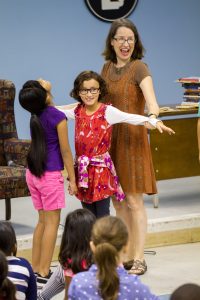
Mary takes students on a journey through the writing process. Where do ideas come from? How do journals, webs, and outlines help? Why is revising so important? How does a book get published? Mary concludes with an improvisational “revision” game.
Story-Inventing Workshop (Kindergarten-Grade 3)
Students learn the three-part trajectory of the classic story. Using a theater game, they learn how to construct a story—often with hilarious results. Especially helpful for young, reluctant writers.
The Writer’s Notebook (Grades 3-8)
The writer’s notebook is an important writing tool. Mary explains the difference between diaries and writers’ notebooks, shares material from her childhood diaries as well as writer’s notebooks, shows how to this tool in the writing process, and concludes with a humorous game.
Creating Characters (Grades 3-8)
How does a novelist create and develop characters? Mary shows students her strategies for developing characters and uses improvisational games to help students create and give voice to a character. Literary elements that are covered: voice, point of view, character traits, pre-writing, webbing, and self-questioning.
The Chicken of the Family (Preschool and Kindergarten)
Mary shares the story of how she turned a personal experience (being teased) from her own childhood into a picture book and a musical. She reads the book and then involves the audience in a fun improvisation.
Classroom Workshops and Residencies
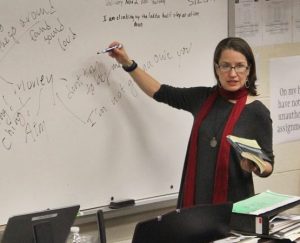 Mary is available for short and long term teaching residencies. Getting the chance to work with an author can be transformational. These sessions can be designed to support and complement specific objectives in the language arts curriculum, including Common Core objectives. For more info, see the Residency Info Sheet. You can also hear and see a sample of the wonderful and imaginative work of students in a typical residency. Contact Mary directly for more information.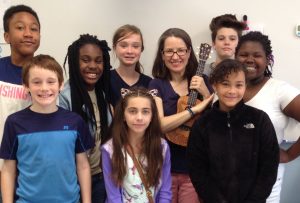
- Poetry
- Song Writing
- STEM-Song Writing
- Fiction
- Mystery Writing
- Folktale Writing
Book Sales
In conjunction with an author visit, many schools and libraries like to offer book sales/signing. You can order books in quantity at a discount from the publisher, work with your local bookseller, or a bookselling agent. Mary can pass on information regarding this once a visit is booked.
See Also
- Handout to Prepare Kids for Author Visit (to photocopy, post online, or send to parents via email)
- Creative Ways to Make Your Author Visit a Success
- Schedule of Appearances
- Recent Presentations
- Recommendations
- Information about Residencies
- Zoom/Skype with Mary Amato
- Award and Honors
Presentations for Adults
What’s So Funny: Finding and Writing Humor in Children’s Books
Explore elements of humor and push yourself to find and exploit humor in your own writing. We’ll look at the funniest characters, scenes, plots, and language in great children’s books and identify specific ways to play with humor.
Fresh Eyes and a Sharp Knife: How To Make a Good Story Great
Did you start your book because a childhood memory or a kernel of an idea kept haunting you? Sometimes holding on to that initial impulse is crucial, but sometimes letting it go is even more important. Hear the stories of how one writer moved from “good idea” to “great idea” with both a picture book and a novel and come away with some “how to” strategies to face your next revision.
Writing for Voice
What is “voice”? Why is it so important? How do you find it? How do you write with it? Mary analyzes and explores the concept of voice, using samples from her own work and the work of others.
Writing the Soul
Writing is a process that not only enables you to capture life, but also to figure out what it means. In this inspirational talk, Mary Amato reveals how a profound loss led her to journal writing and how that has shaped her as a professional writer and as a person and as a mother of two. Hearing her story will motivate you to write yours.
Breaking into Print
Mary shares advice for writing and publishing articles, stories, and more.
Especially for Teachers
Who Wants to Revise?
When asked to revise work, many students groan or panic. Join Mary Amato as she shares of series of fun, concrete strategies for helping writers to actually look forward to tackling revisions. She’ll also share stories and examples from recent work. You’ll want to pass these tips along to your students (and be inspired to use them in your own writing).
Creating Character
How does a novelist create and develop characters? Mary Amato shows her strategies for developing characters and demonstrates improvisational games to help students create and give voice to a character.
Growing Writers
Mary offers an overview of concrete strategies from her more focused workshops (on creating characters, using a writer’s notebook, and revising) that will encourage kids to write.